How Alcohol Affects Sleep Quality
A good night’s sleep is one of the most important foundations of physical and mental health. Quality sleep supports memory, emotional regulation, immune function, heart health, and overall well-being. Yet many people unknowingly sabotage their sleep by consuming alcohol. While alcohol is often viewed as a way to relax or “wind down” after a stressful day, it actually disrupts the natural sleep cycle in significant ways. Although it may help someone fall asleep faster, the quality of that sleep is often much poorer, leaving them feeling exhausted the next day.
For individuals struggling with alcohol use disorder, sleep disturbances can become a chronic issue that continues long after drinking has stopped. Understanding the relationship between alcohol and sleep is an important step toward recognizing the hidden effects of excessive drinking and seeking treatment when necessary.
Why Alcohol Makes You Feel Sleepy
Alcohol is a depressant, meaning it slows activity in the central nervous system. Shortly after drinking, many people experience feelings of relaxation and drowsiness because alcohol increases the effects of gamma-aminobutyric acid (GABA), a neurotransmitter responsible for calming brain activity.
This initial sedative effect is why many individuals mistakenly believe alcohol improves sleep. In reality, alcohol only helps induce sleep temporarily. As the body begins metabolizing alcohol throughout the night, numerous physiological changes occur that interrupt healthy sleep patterns.
Instead of experiencing restorative rest, the brain becomes increasingly active as alcohol leaves the system.
The Different Stages of Sleep
Healthy sleep consists of several repeating stages throughout the night:
- Light sleep
- Deep sleep
- Rapid Eye Movement (REM) sleep
Each stage serves an important purpose.
Deep sleep is when the body repairs tissues, strengthens the immune system, and restores physical energy.
REM sleep is essential for emotional regulation, learning, memory consolidation, and mental recovery.
A healthy adult cycles through these stages four to six times every night. Alcohol interferes with this process, preventing the body from receiving the restorative benefits of quality sleep.
Alcohol Suppresses REM Sleep
One of alcohol’s biggest effects is its ability to reduce REM sleep during the first half of the night.
Although someone may appear to be sleeping soundly, their brain is missing one of the most restorative stages of sleep.
Reduced REM sleep can contribute to:
- Poor concentration
- Mood swings
- Increased anxiety
- Memory problems
- Difficulty learning new information
- Irritability
- Emotional instability
As alcohol wears off later in the night, the brain often attempts to “catch up” on REM sleep. This rebound effect frequently results in vivid dreams, nightmares, and restless sleep.
Many heavy drinkers report waking repeatedly throughout the night despite falling asleep quickly.
Frequent Nighttime Awakenings
Alcohol changes the body’s sleep architecture.
This often leads to:
- Waking multiple times
- Tossing and turning
- Trouble falling back asleep
- Restless movements
- Feeling awake long before the alarm
Even if someone spends eight or nine hours in bed, the interrupted sleep leaves them feeling fatigued.
Alcohol Increases Snoring and Sleep Apnea
Alcohol relaxes muscles throughout the body—including those that help keep the airway open.
This relaxation increases the likelihood of:
- Loud snoring
- Airway obstruction
- Sleep apnea episodes
- Reduced oxygen levels
- Choking or gasping during sleep
For individuals who already have obstructive sleep apnea, alcohol can make symptoms significantly worse.
Sleep apnea itself increases the risk of:
- High blood pressure
- Stroke
- Heart disease
- Diabetes
- Daytime fatigue
Combining alcohol with untreated sleep apnea can become especially dangerous.
Increased Bathroom Trips
Alcohol suppresses antidiuretic hormone (ADH), causing the kidneys to produce more urine.
This often results in waking multiple times during the night to use the bathroom.
Each interruption breaks the sleep cycle, making it harder to return to deep sleep afterward.
Night Sweats and Temperature Changes
Many people experience excessive sweating after drinking.
Alcohol widens blood vessels near the skin, initially creating a sensation of warmth.
As the body attempts to regulate temperature overnight, many individuals experience:
- Night sweats
- Feeling overheated
- Chills
- Restlessness
- Frequent blanket adjustments
These temperature fluctuations further disrupt restorative sleep.
Alcohol Causes Early Morning Awakening
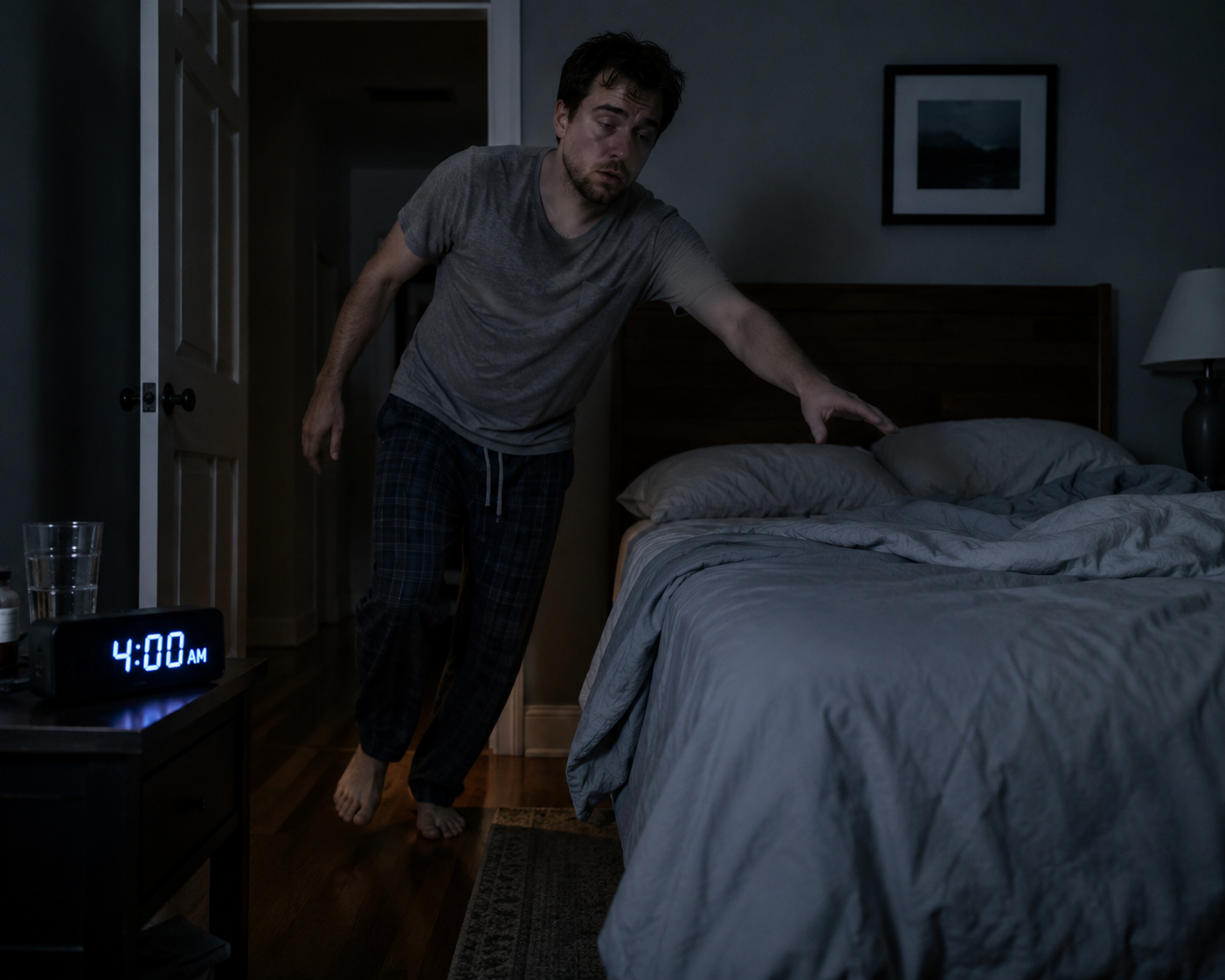
Many drinkers notice they wake up hours before their alarm and cannot fall back asleep.
This occurs because alcohol metabolism activates stress hormones later in the night.
As blood alcohol concentration drops, the body releases chemicals that increase alertness rather than promoting sleep.
The result is fragmented sleep and an early morning feeling of exhaustion.
Alcohol and Insomnia
Over time, repeated drinking can contribute to chronic insomnia.
Individuals often begin drinking specifically to help themselves fall asleep.
Unfortunately, this creates a harmful cycle:
Difficulty sleeping leads to drinking.
Drinking worsens sleep quality.
Poor sleep increases stress and anxiety.
Stress makes falling asleep even harder.
Eventually, larger amounts of alcohol become necessary to produce the same sedative effect due to increasing tolerance.
This cycle can quickly contribute to alcohol dependence.
Sleep Problems During Alcohol Withdrawal
One of the most challenging aspects of early recovery is temporary sleep disruption.
During withdrawal, many people experience:
- Insomnia
- Nightmares
- Restlessness
- Anxiety
- Frequent awakenings
- Vivid dreams
Although frustrating, these symptoms are usually temporary.
As the brain heals from prolonged alcohol exposure, natural sleep patterns gradually begin returning.
Many people report noticeable improvements after several weeks or months of sobriety.
Poor Sleep Increases Relapse Risk
Sleep problems are one of the strongest predictors of relapse.
When someone is exhausted, they may struggle with:
- Emotional regulation
- Stress management
- Impulse control
- Motivation
- Cravings
Poor sleep can make recovery feel much harder than necessary.
Improving sleep hygiene is often an important part of comprehensive addiction treatment.
The Mental Health Connection
Alcohol and sleep both directly affect mental health.
Chronic sleep deprivation increases the likelihood of:
- Anxiety disorders
- Depression
- Irritability
- Panic attacks
- Difficulty coping with stress
Alcohol may temporarily numb emotional pain, but it often worsens mental health over time.
Many individuals find that anxiety begins improving naturally once they maintain consistent sobriety and healthy sleep patterns.
Long-Term Physical Consequences
Years of poor sleep combined with heavy alcohol use can increase the risk of:
- Heart disease
- High blood pressure
- Obesity
- Diabetes
- Weakened immune function
- Cognitive decline
- Liver disease
Healthy sleep is essential for every major system in the body.
Without it, long-term health begins to decline.
Healthy Ways to Improve Sleep Without Alcohol
Fortunately, there are healthier ways to improve sleep naturally.
Helpful habits include:
- Maintaining a consistent bedtime
- Limiting caffeine late in the day
- Exercising regularly
- Keeping the bedroom cool and dark
- Avoiding screens before bed
- Practicing meditation or deep breathing
- Reading before sleep
- Limiting heavy meals before bedtime
For individuals recovering from alcohol addiction, these routines become increasingly effective as the brain heals.
When Professional Treatment Is Needed
If alcohol has become the primary way to fall asleep, it may indicate a deeper problem.
Warning signs include:
- Drinking every night to sleep
- Needing increasing amounts of alcohol
- Waking frequently despite drinking
- Experiencing withdrawal symptoms without alcohol
- Continuing to drink despite health problems
- Feeling unable to stop drinking
Professional treatment addresses both alcohol dependence and the underlying sleep disturbances that often accompany it.
Medical detox, counseling, behavioral therapies, and ongoing recovery support can help individuals restore healthy sleep while building long-term sobriety.
Recovery Leads to Better Sleep
Although early recovery can involve temporary sleep challenges, most people eventually experience dramatically better sleep than they did while drinking.
Many individuals report:
- Falling asleep naturally
- Sleeping through the night
- Waking feeling refreshed
- Improved energy
- Better concentration
- Reduced anxiety
- Greater emotional stability
These improvements often become some of the earliest and most rewarding benefits of sobriety.
Final Thoughts
Alcohol may seem like an easy solution for falling asleep, but it ultimately undermines the body’s natural ability to achieve restorative rest. By disrupting REM sleep, increasing nighttime awakenings, worsening breathing problems, and contributing to chronic insomnia, alcohol can leave individuals feeling physically and emotionally drained. Over time, poor sleep can worsen mental health, increase the risk of relapse, and negatively affect nearly every aspect of overall well-being.
If alcohol has become part of your nightly routine or is affecting your ability to sleep and function during the day, seeking professional help can make a lasting difference. Recovery not only supports sobriety—it also allows the brain and body to heal, making restful, restorative sleep possible again.
Call Georgia Addiction Treatment Center today at 855-952-3546 to speak with one of our caring admissions specialists and start your path toward lasting recovery.