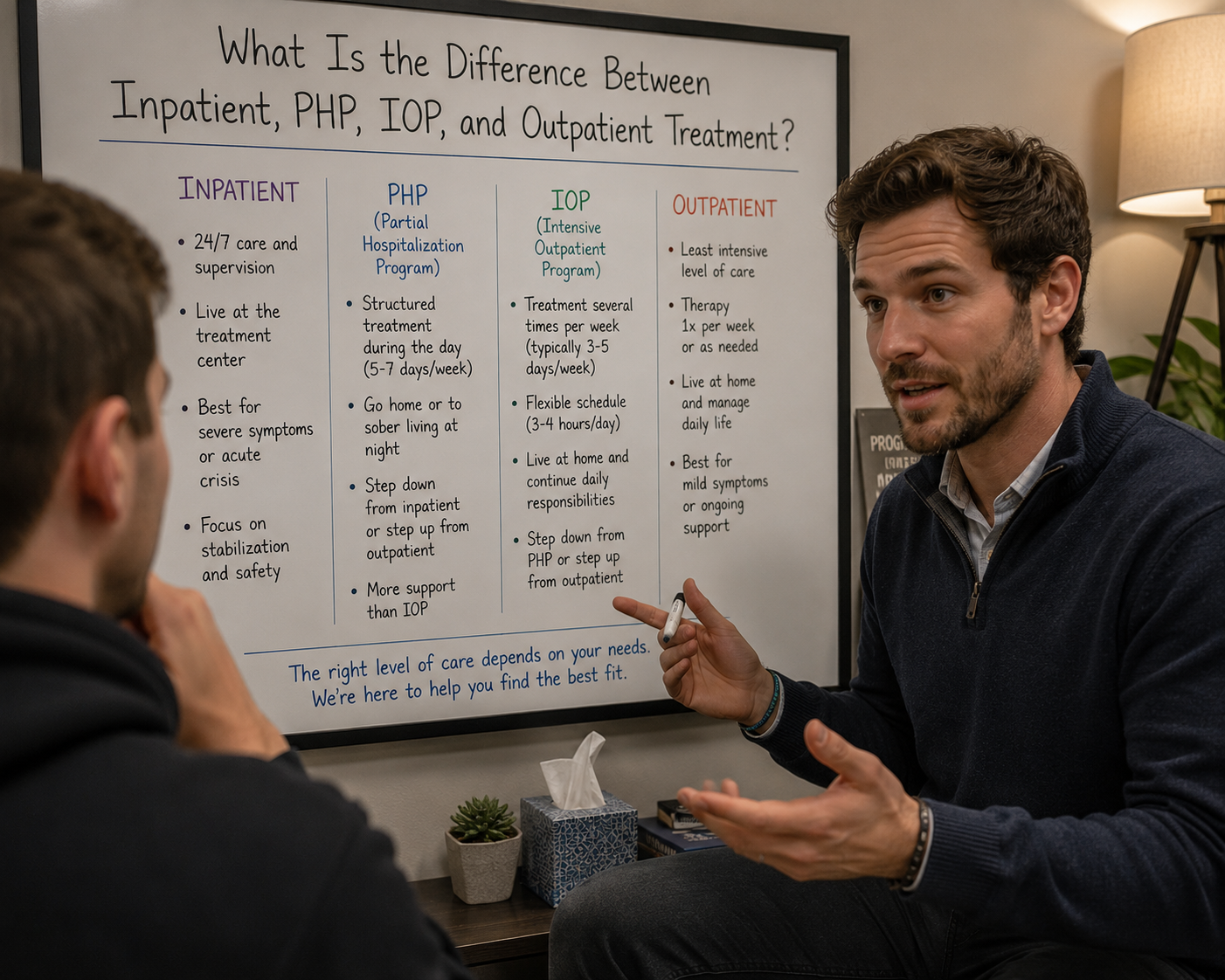
What Is the Difference Between Inpatient, PHP, IOP, and Outpatient Treatment?
When someone decides to seek help for addiction or mental health issues, one of the first questions they often ask is: “What level of treatment do I actually need?” The answer depends on many factors, including the severity of the condition, the person’s living environment, medical history, and overall stability.
Treatment is not one-size-fits-all. Some people need 24/7 care and supervision, while others may only need therapy sessions a few times a week. Understanding the differences between inpatient treatment, PHP, IOP, and outpatient care can help people make more informed decisions about recovery.
What Is Inpatient Treatment?
Inpatient treatment, sometimes called residential treatment, is the highest level of care outside of hospitalization. During inpatient treatment, individuals live at the treatment facility full time while receiving structured support and therapy every day.
This level of care is often recommended for people who:
- Have severe addiction issues
- Are struggling with serious mental health symptoms
- Need medical supervision during detox
- Have relapsed multiple times
- Live in unstable or triggering environments
- Need separation from drugs, alcohol, or outside stressors
Inpatient programs typically include:
- Individual therapy
- Group counseling
- Medical monitoring
- Mental health treatment
- Structured daily schedules
- Relapse prevention planning
One major benefit of inpatient treatment is that it removes people from environments that may contribute to substance abuse or emotional instability. This can allow individuals to focus entirely on healing and recovery.
What Is PHP (Partial Hospitalization Program)?
A Partial Hospitalization Program, commonly called PHP, is a step down from inpatient care but still provides highly structured treatment.
In PHP, individuals attend treatment for several hours a day, often five days a week, but they do not stay overnight at the facility. Some people live at home during PHP, while others stay in sober living homes or supportive housing.
PHP is often ideal for people who:
- Need intensive support but not 24/7 supervision
- Recently completed inpatient treatment
- Require ongoing mental health stabilization
- Need a highly structured recovery schedule
PHP programs may include:
- Therapy sessions
- Psychiatric care
- Medication management
- Group therapy
- Skills-building activities
- Relapse prevention education
Many people view PHP as a bridge between inpatient care and more independent living.
What Is IOP (Intensive Outpatient Program)?
IOP usually involves several therapy sessions per week, often during the day or evening, making it possible for people to continue working, attending school, or handling family responsibilities while receiving treatment.
IOP may be appropriate for people who:
- Have mild to moderate addiction or mental health issues
- Have completed inpatient or PHP treatment
- Need continued accountability and support
- Have stable living environments
Treatment during IOP commonly includes:
- Group therapy
- Individual counseling
- Family therapy
- Relapse prevention
- Coping skills development
- Mental health education
One major advantage of IOP is flexibility. People can receive meaningful treatment while slowly rebuilding normal routines and responsibilities.
What Is Outpatient Treatment?
Outpatient treatment is typically the least intensive level of care. Individuals attend scheduled therapy or counseling appointments while living fully at home and continuing daily life activities.
Outpatient care may involve:
- Weekly therapy sessions
- Psychiatric appointments
- Medication management
- Support groups
- Recovery coaching
This level of care is often best for people who:
- Have mild symptoms
- Are highly motivated in recovery
- Have strong support systems
- Need ongoing maintenance after higher levels of treatment
Outpatient treatment can still be incredibly effective, especially for people who remain committed to recovery and consistently attend sessions.
Which Level of Care Is Right for You?
Choosing the right level of care depends on several important factors, including:
- Severity of addiction or mental health symptoms
- Risk of relapse
- Medical needs
- Home environment
- Support systems
- Personal responsibilities
- Past treatment history
Someone actively struggling with heavy substance use or severe depression may need inpatient care first. Another person with stable housing and milder symptoms may benefit greatly from IOP or outpatient therapy.
Recovery is not linear, either. Many people move through multiple levels of care over time. A person might begin in inpatient treatment, transition into PHP, step down into IOP, and eventually continue with outpatient therapy for long-term support.
Recovery Looks Different for Everyone
One of the biggest misconceptions about treatment is that there is only one “correct” way to recover. In reality, successful recovery often involves finding the level of support that matches a person’s specific needs at a specific moment in time.
Some people require intensive structure and medical care. Others need flexibility and continued guidance while managing work or school responsibilities. What matters most is taking the first step toward getting help.
No matter which treatment path someone chooses, recovery is possible with the right support system, professional guidance, and willingness to keep moving forward.
FAQ
What is the main difference between inpatient and outpatient treatment?
Inpatient treatment involves living at a facility full time, while outpatient treatment allows individuals to live at home and attend scheduled therapy sessions.
Is PHP more intensive than IOP?
Yes. PHP typically involves treatment for several hours a day, multiple days a week, while IOP usually involves fewer weekly hours and more flexibility.
Can someone work while attending IOP?
In many cases, yes. IOP programs are often designed to allow people to continue working, attending school, or managing family responsibilities.
How long does treatment usually last?
Treatment length varies depending on the individual’s needs. Some programs last a few weeks, while others may continue for several months or longer.
Do people move between different levels of care?
Yes. Many individuals gradually step down through levels of care as they make progress in recovery and build stability.
If you or a loved one are struggling with mental health issues, please give us a call today at 855-952-3546.