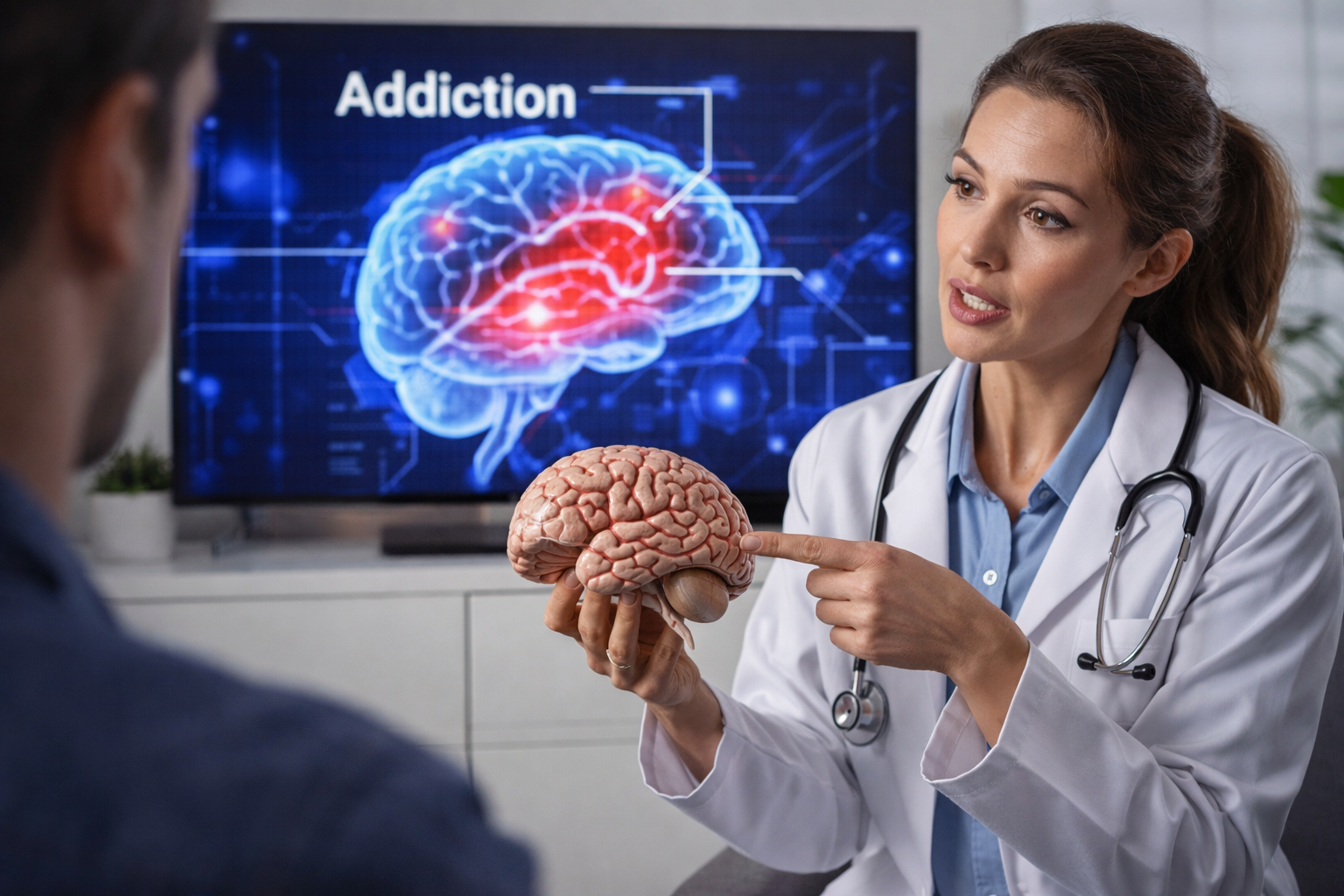
What Happens to Your Brain During Addiction
Addiction is often misunderstood as simply a lack of willpower or poor decision-making. In reality, addiction is a complex condition that directly affects the brain. Substances like drugs and alcohol can alter how the brain communicates, processes rewards, and regulates emotions. Over time, these changes can make it extremely difficult for a person to stop using substances, even when they know the behavior is harmful. Understanding what happens in the brain during addiction helps explain why it can be so challenging to overcome without proper support.
One of the first areas of the brain affected by addiction is the reward system. The brain naturally releases chemicals such as dopamine when we do things that help us survive and feel good, like eating, exercising, or spending time with people we care about. Dopamine is responsible for creating feelings of pleasure and motivation. Drugs and alcohol trigger a much larger release of dopamine than normal activities do, which can create an intense sense of euphoria. Because the brain experiences such a strong reward, it begins to associate the substance with pleasure and may start craving it again.
As substance use continues, the brain begins to adapt to these artificial dopamine surges. Over time, the brain may produce less dopamine on its own or reduce the number of receptors that respond to it. This means that normal activities that once brought joy may no longer feel as rewarding. A person may begin to feel emotionally flat or unable to experience pleasure without the substance. This shift can make it harder to stop using because the brain starts relying on the substance to feel any sense of satisfaction.
Another important change occurs in the brain’s decision-making and impulse control centers. The prefrontal cortex, which helps people think clearly, make responsible choices, and control impulses, can become weakened with repeated substance use. As this area becomes less effective, a person may struggle to resist cravings or think through the consequences of their actions. This helps explain why individuals dealing with addiction may continue using substances even when they recognize the negative effects on their health, relationships, and daily life.
Memory and learning systems in the brain also play a role in addiction. The brain is constantly forming associations between experiences and emotions. When someone uses a substance in a certain environment or situation, the brain may begin linking that environment with the pleasurable effects of the substance. Later, returning to the same place or experiencing the same emotions can trigger powerful cravings. These learned connections can make relapse more likely if they are not addressed during recovery.
Stress is another factor that influences addiction within the brain. Many substances affect the brain’s stress response system. Over time, addiction can make this system more sensitive, meaning that even small stressful situations may trigger intense discomfort. When this happens, the brain may signal that using the substance will provide relief. This can create a cycle where stress leads to cravings, and cravings lead to continued substance use.
Addiction can also affect emotional regulation. The brain regions responsible for managing emotions may become disrupted, making it harder for someone to handle frustration, sadness, or anxiety. As a result, substances may begin to feel like the only way to cope with difficult emotions. Unfortunately, while substances may temporarily numb these feelings, they often make emotional instability worse in the long run.
Over time, these brain changes can lead to tolerance and dependence. Tolerance occurs when a person needs larger amounts of a substance to achieve the same effect they once experienced with smaller amounts. Dependence happens when the brain and body begin to rely on the substance to function normally. When the substance is not present, withdrawal symptoms can appear, which may include anxiety, irritability, fatigue, or physical discomfort.
Although addiction changes the brain, recovery is possible because the brain has the ability to heal and adapt. This process, known as neuroplasticity, allows the brain to gradually rebuild healthier pathways over time. Through therapy, supportive environments, and positive lifestyle changes, individuals can retrain their brains to experience reward and emotional balance without relying on substances.
Understanding how addiction affects the brain helps remove stigma and highlights why compassion and treatment are so important. Addiction is not simply a matter of choice; it is a condition that changes how the brain functions. With the right support and a commitment to recovery, individuals can begin to restore healthy brain function and build a future that is not controlled by addiction.
If you or a loved one are struggling with addiction or mental health issues, please give us a call today at 855-952-3546