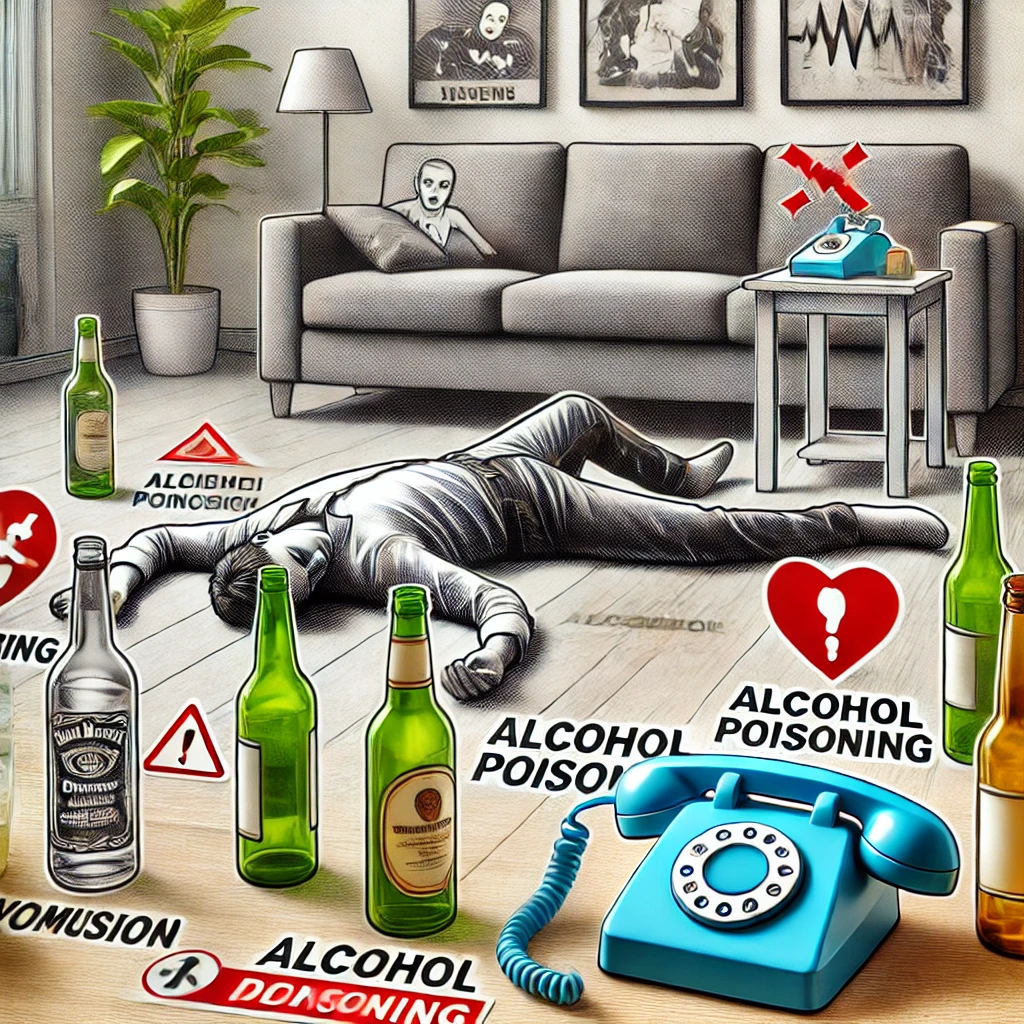
Alcohol poisoning is a serious and life-threatening condition that happens when someone consumes too much alcohol in a short period. This condition occurs when the body becomes overwhelmed by the amount of alcohol, making it unable to process it fast enough. Knowing the symptoms and dangers of alcohol poisoning is important to avoid severe consequences and even death.
How Does Alcohol Poisoning Happen?
When you drink alcohol, your liver works to break it down. However, if you drink too much too quickly, your liver can’t keep up, and alcohol starts to build up in your bloodstream. This can affect important functions like breathing, heart rate, and body temperature.
Drinking a large amount of alcohol in a short time, such as during binge drinking, can quickly lead to alcohol poisoning. The more alcohol in your system, the more it impacts the brain and body, slowing down vital processes and putting your life at risk.
Symptoms of Alcohol Poisoning
It’s important to recognize the symptoms of alcohol poisoning to act quickly and get help. Here are some common signs to watch out for:
- Confusion: The person may become extremely disoriented or unable to respond.
- Vomiting: Alcohol irritates the stomach lining, often causing nausea and vomiting.
- Seizures: Severe alcohol poisoning can lead to seizures.
- Slow or irregular breathing: Breathing may slow down to fewer than eight breaths per minute, or the person may have pauses in breathing.
- Pale or bluish skin: As the body struggles to get enough oxygen, the skin may turn pale or have a blue tint, especially around the lips.
- Unconsciousness: The person may pass out and be difficult or impossible to wake up.
If you see any of these symptoms, it’s crucial to get medical help right away.
What To Do If You Suspect Alcohol Poisoning
If you think someone is suffering from alcohol poisoning, don’t wait for all the symptoms to appear—seek help immediately. Here’s what you should do:
- Call 911: Alcohol poisoning is an emergency, and getting medical help quickly can save a life.
- Keep them awake and sitting up: If they are conscious, try to keep them awake and in a sitting position. This can help reduce the risk of choking on vomit.
- If unconscious, place them on their side: If the person is unconscious, lay them on their side to prevent choking.
- Monitor their breathing: Watch their breathing and make sure it’s not too slow or irregular. If they stop breathing, perform CPR if you know how until help arrives.
- Don’t leave them alone: Stay with the person until emergency medical services arrive.
What Not To Do
Sometimes, people try to use home remedies or make assumptions about how to handle alcohol poisoning. Here are some things you should avoid:
- Don’t try to make them sleep it off: Sleeping won’t help someone recover from alcohol poisoning. It can make the situation worse by masking the symptoms.
- Don’t give them coffee: Caffeine doesn’t reverse the effects of alcohol poisoning and can make dehydration worse.
- Don’t try to make them vomit: This can lead to choking, especially if the person is already semi-conscious or unconscious.
Long-Term Effects of Alcohol Poisoning
Even if a person survives alcohol poisoning, they may face long-term consequences. Alcohol poisoning can cause permanent brain damage and affect memory, learning, and motor skills. It can also damage the liver and other vital organs. Repeated episodes of alcohol poisoning increase the risk of alcoholism and other chronic health problems.
How To Prevent Alcohol Poisoning
Preventing alcohol poisoning is simple: drink responsibly. Here are some tips to avoid this dangerous condition:
- Limit your intake: Know your limits and drink alcohol slowly to allow your body time to process it.
- Eat before and while drinking: Food helps slow the absorption of alcohol into the bloodstream.
- Drink water between alcoholic drinks: Staying hydrated can help prevent alcohol poisoning by balancing the effects of alcohol.
- Avoid binge drinking: Binge drinking is one of the most common causes of alcohol poisoning. Stick to a moderate pace to keep your alcohol consumption in check.
Final Thoughts
Alcohol poisoning is a medical emergency that can have devastating effects if not treated quickly. Being aware of the symptoms and knowing how to respond can save a life. Always drink responsibly and take action if you or someone else shows signs of alcohol poisoning.
Stay safe, and if in doubt, always seek help. Preventing alcohol poisoning is far easier than dealing with its consequences.
If you or a loved one are struggling with addiction or mental health issues, please give us a call today at 855-952-3546