What Is DBT and How Can It Help with Emotional Regulation?
Emotions are a normal part of life. Everyone feels stress, anger, sadness, frustration, anxiety, or disappointment at times. But for some people, emotions can feel overwhelming, intense, and difficult to control. When emotions begin affecting relationships, work, school, or everyday life, it may be a sign that additional support is needed.
One therapy approach that has helped many people improve emotional control is Dialectical Behavior Therapy, commonly known as DBT.
In 2026, DBT continues to be one of the most effective and widely used therapies for emotional regulation, mental health disorders, and addiction recovery. It teaches people practical skills to better manage emotions, improve relationships, and reduce destructive behaviors.
What Does DBT Stand For?
Today, DBT is commonly used to help individuals dealing with:
- Anxiety
- Depression
- PTSD
- Mood disorders
- Addiction
- Eating disorders
- Emotional dysregulation
- Chronic stress
- Relationship conflict
The goal of DBT is not to eliminate emotions. Instead, it helps people learn how to manage emotions in healthier and more productive ways.
What Is Emotional Regulation?
Emotional regulation refers to a person’s ability to manage and respond to emotions appropriately.
When emotional regulation is difficult, people may:
- React impulsively
- Have explosive anger
- Shut down emotionally
- Experience frequent mood swings
- Struggle with anxiety or panic
- Turn to substances or unhealthy coping mechanisms
- Damage relationships during emotional moments
DBT focuses on helping people slow down, recognize emotional triggers, and respond more calmly.
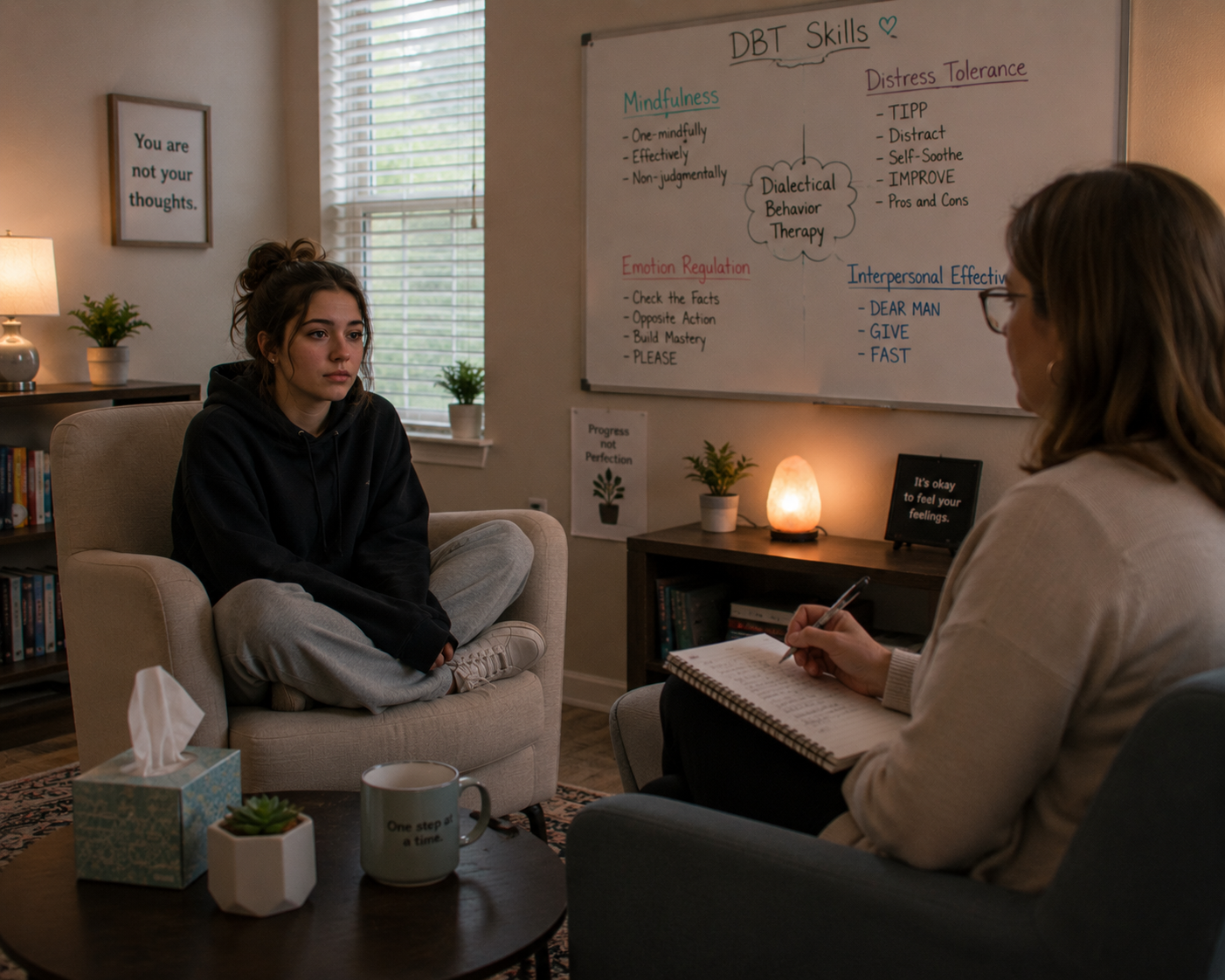
The Four Main Skills of DBT
DBT is built around four major skill areas that work together to improve emotional health.
Mindfulness
Mindfulness teaches people how to stay present in the current moment instead of becoming trapped in racing thoughts, panic, or emotional spirals.
Mindfulness skills can help people:
- Reduce stress
- Improve focus
- Become more aware of emotions
- Pause before reacting impulsively
Learning to stay grounded can make a major difference during emotionally intense situations.
Distress Tolerance
Distress tolerance focuses on handling painful emotions without making situations worse.
Instead of reacting impulsively, DBT teaches people how to tolerate discomfort in healthier ways.
This can help individuals avoid behaviors such as:
- Substance use
- Emotional outbursts
- Self-sabotage
- Risky decision-making
- Isolation
Distress tolerance skills are especially important during moments of crisis or high emotional stress.
Emotional Regulation
Emotional regulation skills help people better understand their emotions and reduce emotional intensity over time.
People learn how to:
- Identify emotional triggers
- Understand emotional patterns
- Reduce vulnerability to emotional swings
- Build healthier coping habits
This can help individuals feel more stable and in control of their daily lives.
Interpersonal Effectiveness
Relationships often become strained when emotions feel overwhelming. DBT teaches communication and relationship skills that help people:
- Set healthy boundaries
- Communicate clearly
- Handle conflict better
- Improve self-respect
- Strengthen personal relationships
Healthy communication can reduce stress and create stronger support systems.
How DBT Helps with Addiction Recovery
Many people struggling with addiction also struggle with emotional regulation.
Substance use is often connected to:
- Stress
- Trauma
- Anxiety
- Depression
- Emotional pain
- Difficulty coping with intense feelings
DBT helps people build healthier coping skills instead of turning to drugs or alcohol during emotional moments.
By learning emotional regulation strategies, individuals can better manage cravings, triggers, and stressful situations without relying on substances.
Who Can Benefit from DBT?
DBT can benefit a wide range of people, even those without a formal mental health diagnosis.
It may be especially helpful for individuals who:
- Feel emotions very intensely
- Struggle with anger or impulsivity
- Experience frequent anxiety
- Have unstable relationships
- Feel emotionally overwhelmed often
- Use unhealthy coping habits
- Struggle with stress management
DBT is commonly offered through:
- Individual therapy
- Group therapy
- Outpatient programs
- Addiction treatment programs
- Virtual telehealth therapy
DBT Is About Progress, Not Perfection
One important thing to understand about DBT is that it does not expect perfection.
Learning emotional regulation takes time. Everyone experiences setbacks, stress, and difficult emotions. DBT simply teaches healthier ways to respond when those moments happen.
The goal is to create more balance, stability, and self-awareness over time.
The Importance of Seeking Help
Mental health struggles can affect every part of life, including relationships, physical health, work performance, and overall happiness. Emotional dysregulation can feel exhausting and isolating, but support is available.
Therapies like DBT have helped many people build healthier coping skills, improve relationships, and regain control over their emotional well-being.
Reaching out for support is not weakness. It is a step toward healing and long-term growth.
Frequently Asked Questions
What is DBT used for?
DBT is commonly used to help people improve emotional regulation, manage stress, reduce impulsive behaviors, and improve relationships.
Is DBT effective for anxiety and depression?
Yes. Many people use DBT skills to help manage anxiety, depression, and emotional overwhelm.
Can DBT help with addiction?
DBT is often used in addiction treatment because it helps people develop healthier coping skills and manage emotional triggers.
How long does DBT therapy take?
The length of treatment varies depending on the individual. Some people participate for a few months, while others continue longer-term therapy.
Is DBT different from CBT?
Yes. While both therapies focus on behavior and thought patterns, DBT places a stronger emphasis on emotional regulation, mindfulness, and distress tolerance.
If you or a loved one are struggling with addiction or mental health issues, please give us a call today at 855-952-3546.