Crack cocaine, often just called “crack,” is notorious for its intense high and devastating grip on users. This form of cocaine gets its name from the crackling sound it makes when heated, a preparation that allows it to be smoked, delivering the drug rapidly to the brain. This method of use contributes significantly to its high addictive potential, but there’s much more to the story.
Rapid and Intense High
The allure of crack cocaine lies primarily in the speed and intensity of its effects. When smoked, crack’s potent stimulant properties take hold almost instantly, peaking within minutes. This rapid onset is due to the drug’s vaporized smoke being absorbed through the lungs, allowing it to travel quickly to the brain where it boosts levels of dopamine, the neurotransmitter associated with pleasure and reward.
The Dopamine Spike
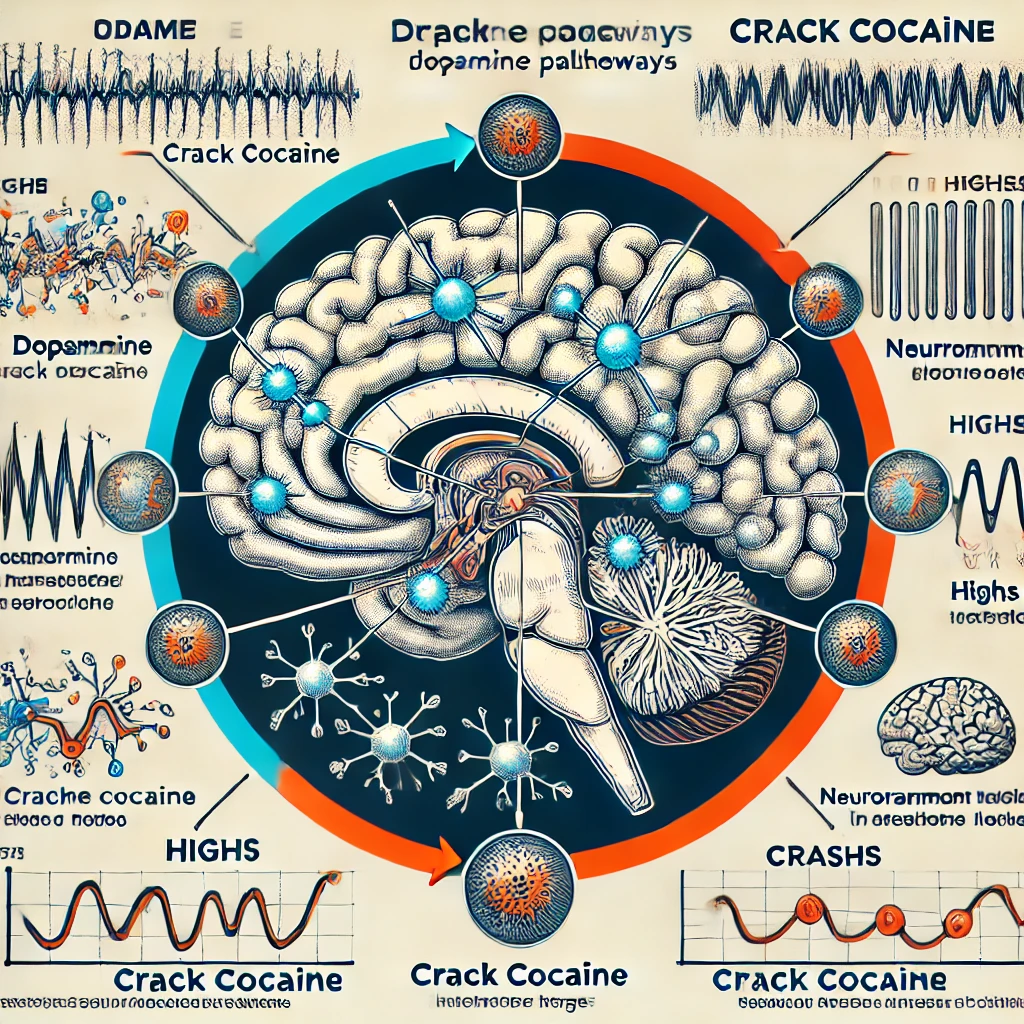
Dopamine is a key player in the “reward circuit” of the brain. Normally, it’s released in response to potential rewards, then recycled back into the cell that released it, shutting off the signal between nerve cells. Crack cocaine interferes with this process by preventing the reabsorption of dopamine, causing an excessive build-up, thus amplifying the user’s feelings of euphoria and pleasure. This unnatural spike in dopamine levels strongly reinforces the behavior of drug use, compelling the user to repeat the experience.
Short-lived Euphoria and the Cycle of Addiction
Crack’s high is powerful yet fleeting, typically lasting only 5 to 10 minutes. This short duration can lead to a cycle of compulsive use, as users may repeatedly smoke crack to maintain their high, often escalating the amount they use over a short period. This cycle of binge usage can rapidly lead to addiction.
Psychological Dependence
The intense high from crack not only alters the brain’s chemistry but also impacts the psychological aspect of addiction. Users may develop a strong mental association between the drug’s effects and their emotional state, using crack as a way to escape from negative feelings or stress. However, the crash that follows the high is often severe, marked by anxiety, irritability, and depression, leading to a compelling urge to use again to alleviate these distressing symptoms.
Socioeconomic Factors
The addictive potential of crack is also influenced by socioeconomic factors. Often cheaper and more readily available than powdered cocaine, crack has historically been associated with impoverished urban areas, where stressors like economic instability and social isolation compound the risk of addiction.
Health Risks and Social Consequences
Beyond its addictive potential, crack cocaine poses severe health risks, including respiratory problems, heart attack, and stroke. It also has profound social consequences, deteriorating personal relationships, financial stability, and increasing the likelihood of engaging in criminal activities.
Crack cocaine’s addictive power is formidable. Its ability to quickly affect the brain’s reward system, coupled with the psychological habits and socioeconomic factors surrounding its use, creates a complex web of challenges for those struggling with addiction. Understanding these factors is crucial in addressing the broader issue of substance abuse and crafting effective interventions.
This analysis of crack cocaine’s addictive nature not only highlights the personal struggles many face but also underlines the broader social and health issues related to drug addiction. It’s a stark reminder of the importance of preventive measures, effective treatment programs, and ongoing support to break the cycle of addiction
If you or a loved one are struggling with addiction or mental health issues, please give us a call today at 855-952-3546