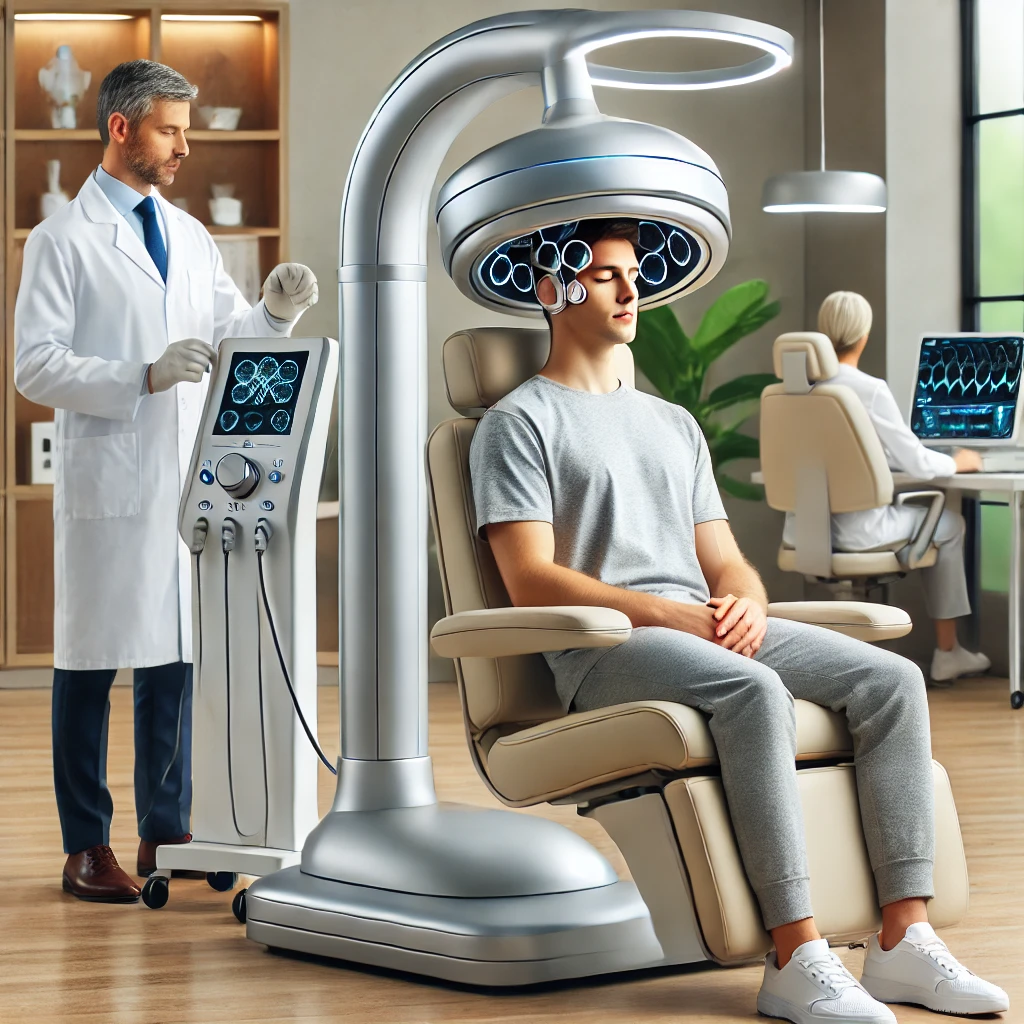
Transcranial Magnetic Stimulation (TMS) therapy is a non-invasive treatment method that has gained popularity in recent years for its effectiveness in treating certain mental health disorders, particularly depression. TMS therapy offers an alternative for individuals who have not responded to traditional treatments like medication or psychotherapy. The treatment involves using magnetic fields to stimulate nerve cells in the brain, specifically targeting areas responsible for mood regulation.
Let’s dive deeper into what TMS therapy is, how it works, and who might benefit from this cutting-edge treatment.
How TMS Therapy Works
TMS therapy operates by using magnetic pulses to stimulate areas of the brain associated with mood control, particularly the prefrontal cortex. This part of the brain is often less active in individuals suffering from depression or other mood disorders. By delivering targeted magnetic fields, TMS helps to ‘wake up’ these inactive areas, enhancing communication between different regions of the brain and improving overall mood regulation.
The magnetic pulses are generated by a machine, which is placed over the patient’s head. This machine sends painless magnetic pulses through the skull and into the brain. The procedure is similar to an MRI scan in terms of the type of magnetic energy used. Patients typically remain fully awake and alert during the procedure, which requires no anesthesia or recovery time.
Each session usually lasts between 20 and 40 minutes, and patients typically undergo treatment five times a week for about 4 to 6 weeks. Although results may vary, many patients report significant improvements in their symptoms after completing the full course of treatment.
The Science Behind TMS
The core principle of TMS lies in neuroplasticity—the brain’s ability to reorganize itself by forming new neural connections. When certain areas of the brain are underactive, as seen in depression, neuroplasticity is reduced. TMS helps to reignite this plasticity by stimulating underactive nerve cells and encouraging them to function more effectively. This stimulation is believed to enhance synaptic activity, making the brain more responsive to signals that regulate mood.
Although the exact mechanisms are not entirely understood, numerous studies have shown that TMS therapy can significantly reduce symptoms of depression, even in patients who have not responded to other forms of treatment. It is also being explored as a treatment option for other conditions, such as anxiety, post-traumatic stress disorder (PTSD), and even obsessive-compulsive disorder (OCD).
Who Can Benefit From TMS Therapy?
TMS therapy is primarily used for individuals who have not found relief from depression through conventional treatments such as antidepressants or talk therapy. It is often recommended for those with treatment-resistant depression, meaning that they’ve tried at least two forms of antidepressants without success.
TMS is also suitable for individuals who prefer a non-invasive treatment option that doesn’t involve medications and their potential side effects. For patients who may be sensitive to drug therapies, TMS provides an alternative that does not introduce foreign substances into the body.
In addition to depression, ongoing research suggests that TMS may be beneficial for a variety of other mental health conditions, including:
- Anxiety disorders
- PTSD
- OCD
- Bipolar disorder
However, TMS therapy is not for everyone. Individuals with a history of seizures or those who have certain metallic implants (such as pacemakers) may not be candidates for the treatment due to the magnetic fields involved.
What to Expect During TMS Therapy
A typical TMS session is simple and straightforward. After arriving at the clinic, the patient is seated in a comfortable chair, and the TMS device is positioned over their head. The machine delivers brief magnetic pulses, and the patient may hear a clicking sound, much like an MRI. Some patients describe a tapping or tingling sensation on their scalp, but the procedure is generally well-tolerated.
Because TMS is non-invasive, patients can return to their daily activities immediately after each session. Unlike electroconvulsive therapy (ECT), TMS does not require anesthesia, and there are no memory-related side effects.
While some individuals may experience mild discomfort or headaches after treatment, these side effects usually subside quickly. Additionally, as the brain responds to the therapy, patients may begin to notice gradual improvements in mood and energy levels within the first few weeks of treatment.
Success Rates and Research
TMS therapy has shown promising results in both clinical trials and real-world practice. Studies suggest that about 50-60% of patients with treatment-resistant depression experience a significant reduction in symptoms following TMS therapy. Of these, around 30% achieve full remission, meaning they no longer meet the criteria for a depressive disorder.
Ongoing research is exploring the full potential of TMS therapy, including its long-term effectiveness and its use for treating other conditions like anxiety and PTSD. While it may not be a one-size-fits-all solution, TMS therapy represents a significant advancement in the field of mental health treatment.
Final Thoughts
TMS therapy is a revolutionary option for individuals struggling with depression and other mental health disorders. By stimulating the brain in a non-invasive and drug-free manner, TMS offers hope for those who have not found relief from traditional treatments. If you or someone you know is dealing with treatment-resistant depression, exploring TMS therapy could be a game-changing step towards recovery.
This treatment continues to evolve, and as research expands, TMS therapy may become even more accessible and effective for a broader range of mental health conditions.
If you or a loved one are struggling with addiction or mental health issues, please give us a call today at 855-952-3546