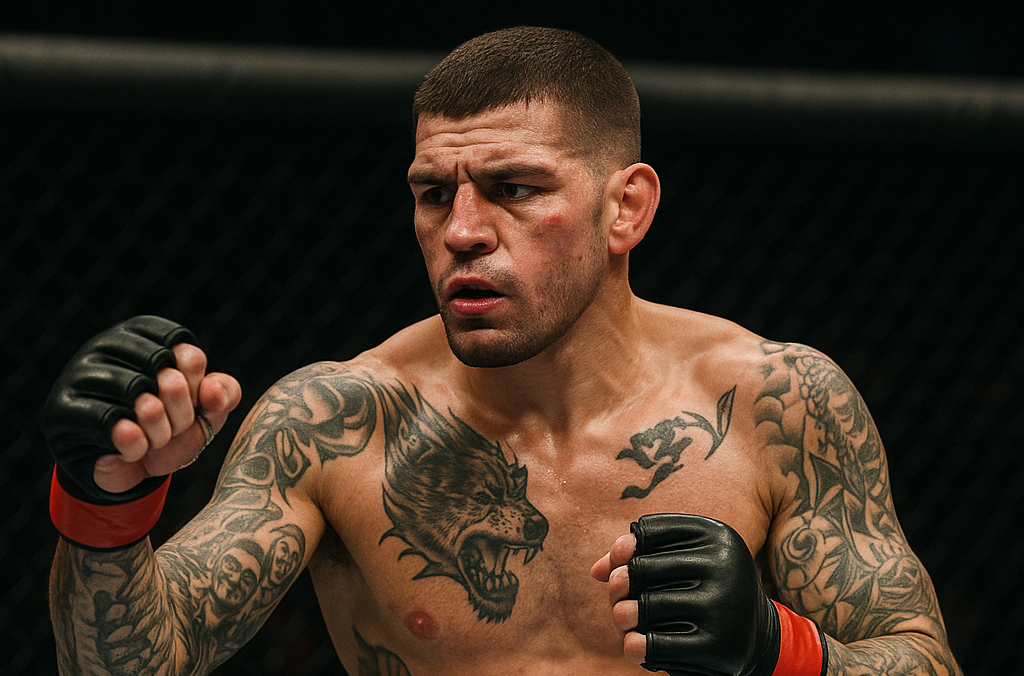
Nick Diaz, a legendary figure in MMA with a two-decade career, has recently found himself at the center of alarming headlines. His girlfriend publicly claimed that he was drugged and forcibly taken across the border into Mexico, where he was confined in a rehab facility against his will.
According to her, Diaz attempted to escape multiple times but was consistently returned. She stated that all communication with him was tightly controlled by a third party, and that Nick had asked to receive treatment in California—not Mexico. Her account painted the situation as more of a forced detainment than a voluntary journey to recovery.
The allegations immediately sparked concern among fans and fellow fighters. Social media exploded with speculation and worry, many questioning what was truly going on behind closed doors.
However, a few days later, longtime coach Cesar Gracie helped calm the storm by posting a photo of himself training with Diaz. He stated that Nick was “healthy and well,” even joking that he hadn’t been cloned or kidnapped. His post helped assure the public that Nick was safe and doing better than the rumors suggested.
Earlier this year, Diaz’s close friend and training partner Jake Shields had mentioned that Nick was “heading in the right direction.” He admitted Nick had been dealing with some challenges for a while, but that things were improving.
Understanding the Backstory
Nick’s struggles have been public for years. In 2024, a disturbing video of him crouched behind bushes and appearing to burn something went viral. Many fans were worried about his mental health and suspected drug use. This wasn’t the first time Nick had faced substance-related issues—he was famously suspended from the UFC for marijuana use in 2015.
The recent incident, involving the alleged forced trip to a Mexican rehab facility, shifts the focus from addiction to autonomy. While desperate family members sometimes resort to drastic measures to get their loved ones help, it brings up a serious question: Can true recovery happen if it starts with force?
Addiction, Agency & the Rehab Journey
1. The Fine Line Between Intervention and Force
Addiction often blinds people to their need for help. But being forced into treatment can feel more like punishment than healing. Recovery usually works best when the person chooses it—when they’re ready, willing, and supported.
2. The Pressures of Fame and Fighting
As a well-known fighter with a reputation for being both gifted and unpredictable, Diaz has carried the weight of expectations for years. From title fights to canceled comebacks, the pressure can push even the strongest to their breaking point. Athletes are often trained to fight through pain, but addiction and mental health require a different kind of strength: vulnerability and acceptance.
3. A Strong Support Network
Despite all the controversy, Nick appears to have a tight support circle. From his brother Nate to his longtime coach and teammates, he has people looking out for him. That community is critical when walking the path of sobriety.
4. What Happens in Rehab
If Nick is currently in treatment, it’s important to understand that rehab isn’t a magic fix—it’s the start of a lifelong journey. From detox and therapy to group support and relapse prevention, rehab gives someone the tools to rebuild their life, but what they do with those tools is up to them.
A Look at the Past Few Days
- Confusion and Clarity
The girlfriend’s emotional claims caused concern, but the public was later reassured by Nick’s coach, who said he was fine and safe. - Signs of Progress
Diaz’s training return and conversations from earlier this year show signs of healing and direction. - Still a Long Road Ahead
Addiction recovery is not linear. Even with recent stability, Nick still has hurdles to overcome—but now, he may be in a better place to face them.
Why This Matters
Nick Diaz’s story reminds us that addiction doesn’t care about fame or physical toughness. Even warriors like Diaz can be vulnerable. And that’s okay. What matters most is the decision to keep fighting—not in the cage, but in life.
Recovery is messy, complicated, and deeply personal. But with the right support and mindset, even the darkest chapters can lead to a new beginning.
As fans, friends, or simply human beings watching from the outside, it’s a chance to show compassion—and to remember that sobriety is a battle worth fighting every single day.
If you or a loved one are struggling with addiction or mental health issues, please give us a call today at 855-952-3546