The Truth About Buprenorphine: Myths, Facts, and How It Helps
When it comes to addiction recovery, few medications are more misunderstood than Buprenorphine. Some people see it as a lifesaving treatment tool, while others wrongly believe it is simply “replacing one drug with another.” Because of this confusion, many people struggling with opioid addiction avoid getting help that could genuinely change — or even save — their lives.
The reality is that buprenorphine has helped countless people stabilize their lives, reduce cravings, avoid dangerous relapses, and begin long-term recovery. Like many addiction treatment tools, it works best when people understand the facts instead of relying on stigma or misinformation.
Buprenorphine is a medication commonly used to treat opioid use disorder. It is often prescribed as part of Medication-Assisted Treatment, also known as MAT. Unlike opioids such as heroin, fentanyl, or oxycodone, buprenorphine works differently in the brain. It partially activates opioid receptors rather than fully stimulating them, which helps reduce cravings and withdrawal symptoms without creating the same intense euphoric high.
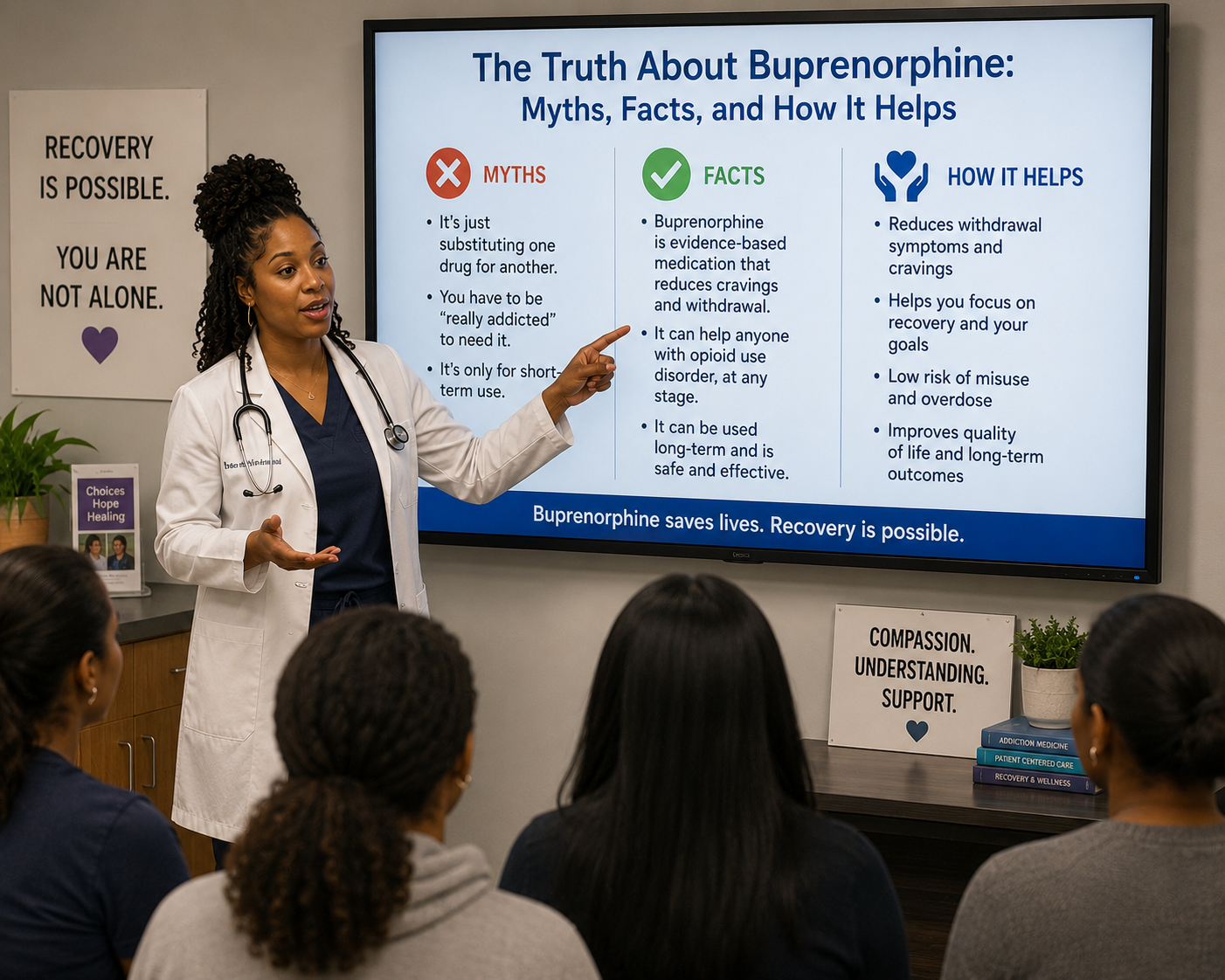
One of the biggest myths surrounding buprenorphine is the idea that using it means someone is “not really sober.” This belief has discouraged many people from seeking treatment. In reality, recovery is about improving health, stability, and quality of life. For many individuals, buprenorphine allows them to function normally again — going to work, rebuilding relationships, and regaining control over daily life.
Another common myth is that buprenorphine is dangerous because it is an opioid-based medication. While it is true that the medication interacts with opioid receptors, it also has what is called a “ceiling effect.” This means that after a certain point, taking more of the medication does not continue increasing its effects in the same way full opioids do. That feature lowers the risk of overdose compared to drugs like heroin or fentanyl.
Buprenorphine can also help reduce relapse risk during the most vulnerable stages of recovery. Opioid withdrawal can feel physically and emotionally overwhelming. Many people relapse simply to stop the pain of withdrawal symptoms. By easing cravings and withdrawal discomfort, buprenorphine gives people a better chance to focus on therapy, support systems, and rebuilding their lives.
Some people also mistakenly believe that medication-assisted treatment is a “shortcut” or an easy way out. But recovery is rarely easy. Taking buprenorphine does not magically solve addiction. People still need emotional support, coping skills, accountability, therapy, and lifestyle changes. The medication is simply one tool that can help stabilize the recovery process.
There is also confusion about how long someone should stay on buprenorphine. The answer is different for every person. Some individuals use it short-term during detox and early recovery, while others may remain on it for longer periods under medical supervision. Recovery is not one-size-fits-all, and treatment plans should be individualized rather than judged.
Families sometimes struggle to understand why a loved one would take medication during recovery. Education is important because stigma can unintentionally discourage progress. Addiction changes brain chemistry, decision-making, and impulse control. Medications like buprenorphine help many people regain stability while they work on the psychological and emotional side of recovery.
Another important fact is that buprenorphine treatment is most effective when paired with counseling and behavioral therapy. Addiction is rarely just physical. Trauma, anxiety, depression, stress, and emotional pain often play major roles in substance use disorders. Therapy helps people understand those deeper issues while developing healthier coping mechanisms.
The opioid epidemic has devastated families across the country, especially with the rise of fentanyl-related overdoses. Because of this, many healthcare professionals believe expanding access to medications like buprenorphine is one of the most effective ways to reduce overdose deaths and help people stay alive long enough to pursue long-term recovery.
That does not mean buprenorphine is perfect or right for everyone. Like any medication, it should be prescribed and monitored properly by medical professionals. But the stigma surrounding it often does more harm than the medication itself.
Recovery should not be about judging how someone gets better. It should be about helping people stay alive, healthy, and hopeful.
For many individuals struggling with opioid addiction, buprenorphine is not replacing one addiction with another — it is replacing chaos with stability, fear with hope, and survival mode with the opportunity to rebuild a life.
FAQ
What is buprenorphine used for?
Buprenorphine is primarily used to help treat opioid use disorder by reducing cravings and withdrawal symptoms.
Is buprenorphine the same as heroin or fentanyl?
No. Buprenorphine works differently in the brain and has a lower risk profile due to its partial opioid effects and ceiling effect.
Can someone overdose on buprenorphine?
While any medication carries risks, buprenorphine has a lower overdose risk compared to full opioids like heroin or fentanyl when taken as prescribed.
Does taking buprenorphine mean someone is not sober?
Many medical professionals consider medication-assisted treatment a valid and effective form of recovery when supervised properly.
Is counseling important while taking buprenorphine?
Yes. Therapy and behavioral support are often key parts of long-term recovery and help address the emotional and psychological side of addiction.
If you or a loved one are struggling with addiction or mental health issues, please give us a call today at 855-952-3546.