How Long Does Drug Withdrawal Last?
Drug withdrawal is one of the biggest reasons people hesitate to stop using. The fear of how long it will last—and how bad it will feel—can keep someone stuck far longer than they want to be. The truth is that withdrawal timelines vary, but they do have an end. And for most people, the worst part is shorter than they expect.
How long drug withdrawal lasts depends on the substance used, how long and how heavily it was used, and the person’s overall health. Some drugs leave the body quickly, while others linger and cause symptoms for weeks or even months. Understanding the general timeline can make the process feel more manageable and less scary.
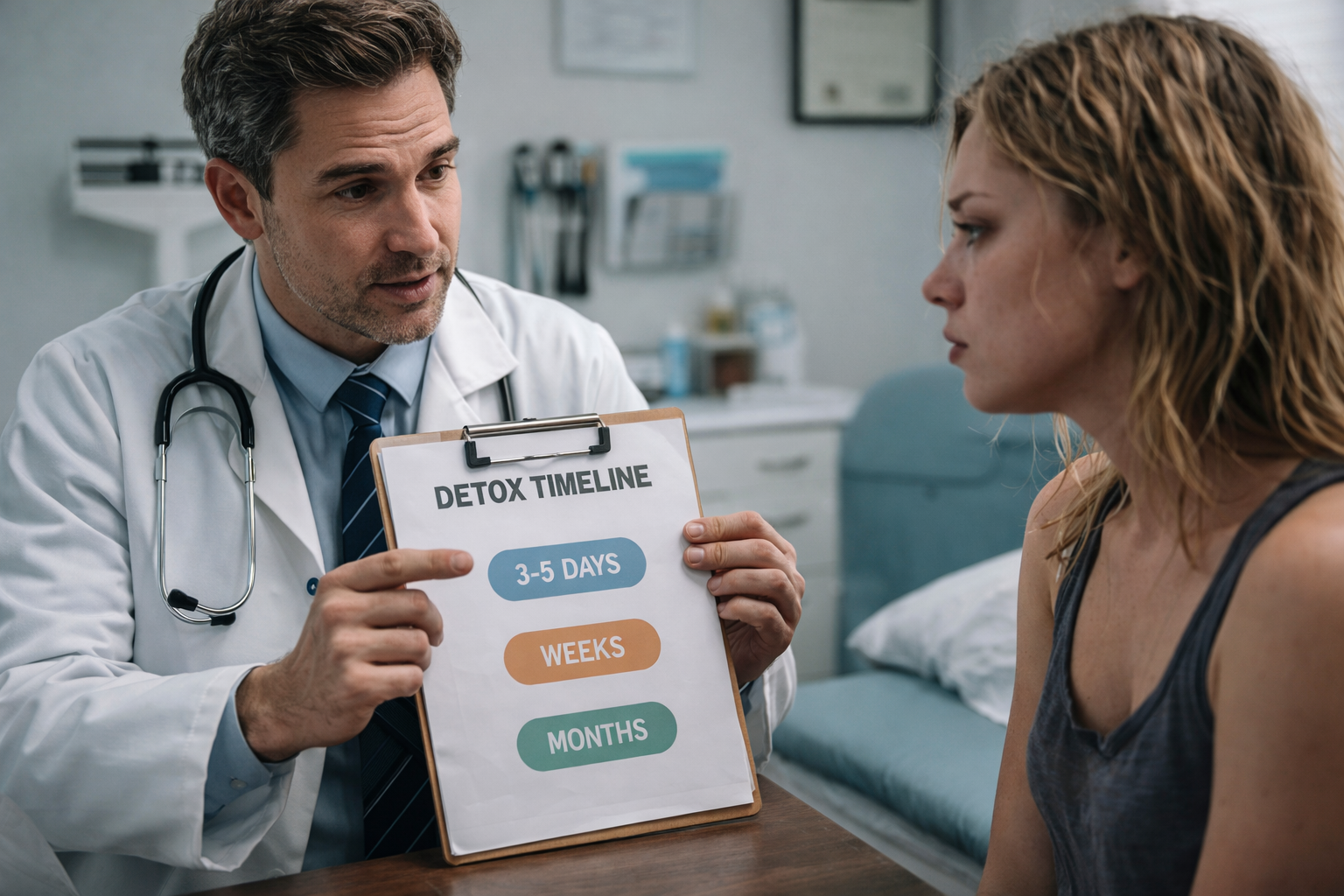
In the first 6 to 24 hours after stopping a drug, early withdrawal symptoms often begin. This is when the body realizes the substance it relied on is gone. Anxiety, irritability, restlessness, sweating, nausea, and cravings are common during this stage. For some drugs, symptoms can start even sooner. This phase is uncomfortable, but it’s usually the beginning of the body recalibrating.
Between days 2 and 7, withdrawal symptoms typically peak. This is often the hardest part. Physical symptoms may intensify and can include muscle aches, vomiting, diarrhea, chills, insomnia, and strong cravings. Emotional symptoms like depression, panic, mood swings, and agitation are also common. For certain substances, withdrawal during this stage can be dangerous and should not be handled alone. This is why medical supervision is often recommended during the first week.
After the first week, many acute physical symptoms begin to fade. By days 7 to 14, the body starts stabilizing. Sleep may still be inconsistent, energy can feel low, and mood may be unpredictable, but the intense physical discomfort usually improves. People often describe this phase as feeling emotionally raw rather than physically sick.
For some substances, withdrawal doesn’t fully end after two weeks. This is known as post-acute withdrawal, or PAWS. It can last anywhere from a few weeks to several months. Symptoms during this phase are usually psychological rather than physical and may include anxiety, low motivation, brain fog, sleep disturbances, and cravings that come and go. While frustrating, these symptoms tend to lessen over time as the brain heals and chemical balance is restored.
It’s important to know that withdrawal is not the same for everyone. Someone who used drugs for a short time may recover quickly, while someone with long-term or heavy use may experience a longer timeline. Mental health, stress levels, and environment also play a role in how intense and prolonged withdrawal feels.
The most important thing to remember is that withdrawal is temporary. It feels permanent when you’re in it, but it isn’t. The body is doing exactly what it’s supposed to do—adjusting, repairing, and relearning how to function without substances. With the right support, the process becomes safer, more manageable, and far less overwhelming.
Life is short, and pushing through withdrawal opens the door to clarity, stability, and a life not controlled by substances.
If you or a loved one are struggling with addiction or mental health issues, please give us a call today at 855-952-3546