Adderall, a prescription medication commonly used to treat Attention Deficit Hyperactivity Disorder (ADHD) and narcolepsy, often raises questions about its classification and potential for abuse. Many wonder if Adderall is considered a narcotic. The short answer is no—it is not classified as a narcotic. However, it is a controlled substance, and its use is regulated due to the risks associated with misuse and dependence.
Let’s dive deeper into what this means and why understanding the distinction is important.
What Is Adderall?
Adderall is a stimulant medication that contains amphetamine salts. It works by increasing the levels of certain neurotransmitters, such as dopamine and norepinephrine, in the brain. These chemicals play a crucial role in attention, focus, and impulse control, which explains why Adderall is so effective in managing ADHD symptoms.
While Adderall has legitimate medical uses, it is also known for its potential for abuse, especially among individuals seeking to improve focus, stay awake longer, or enhance performance.
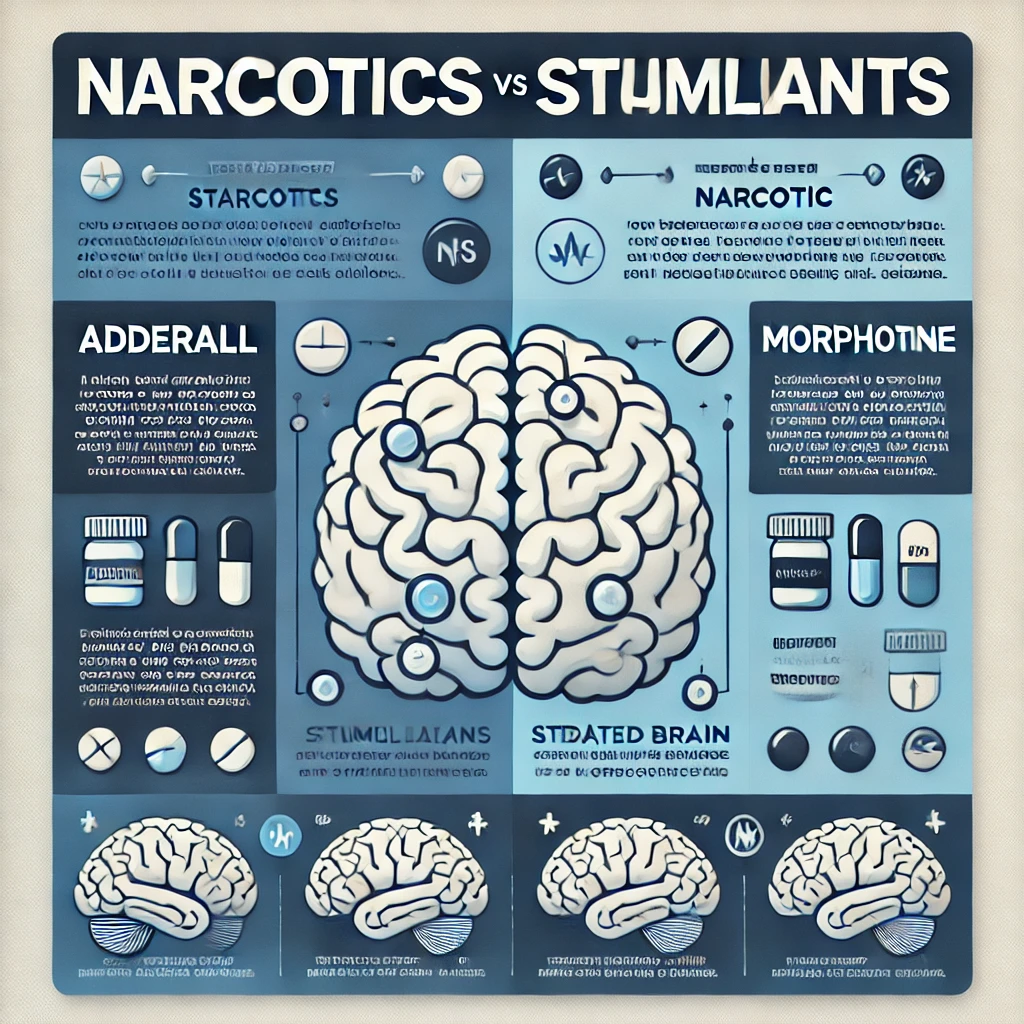
Narcotics vs. Stimulants
To understand why Adderall is not classified as a narcotic, it’s essential to know the difference between narcotics and stimulants:
- Narcotics:
Narcotics are drugs derived from opium or synthetic versions designed to mimic the effects of opiates. These substances, such as morphine, codeine, or fentanyl, are primarily used for pain relief and have sedative effects. Narcotics are classified as depressants because they slow down the central nervous system. - Stimulants:
Stimulants, like Adderall, do the opposite of narcotics. They speed up the central nervous system, increasing alertness, focus, and energy. Other examples of stimulants include Ritalin and cocaine.
Because of these fundamental differences in how the drugs affect the body, Adderall does not fall under the category of narcotics.
Adderall’s Legal Classification
Adderall is classified as a Schedule II controlled substance by the Drug Enforcement Administration (DEA). This designation means:
- It has a high potential for abuse.
- It has accepted medical uses but requires close regulation.
- Abuse of the drug may lead to severe psychological or physical dependence.
Schedule II substances include both narcotics like oxycodone and non-narcotics like Adderall, emphasizing that the classification is more about potential for abuse than specific drug types.
Why Is Adderall Considered Risky?
Even though Adderall isn’t a narcotic, it carries significant risks:
- Addiction and Dependence:
Regular misuse can lead to physical and psychological dependence. This is why doctors monitor prescriptions closely. - Misuse Among Students and Professionals:
Some people without ADHD misuse Adderall to boost concentration, especially during exams or high-stress work periods. This misuse can lead to dangerous side effects, including heart issues and mental health problems. - Withdrawal Symptoms:
Abruptly stopping Adderall can lead to withdrawal symptoms, including fatigue, depression, and irritability.
Misconceptions About Adderall
A common misconception is that any controlled substance is a narcotic. While all narcotics are controlled substances, not all controlled substances are narcotics. This confusion often leads to stigmatization of people who genuinely need medications like Adderall for medical conditions.
Use Adderall Safely
If you’ve been prescribed Adderall, here are some tips to use it responsibly:
- Follow Your Prescription: Never take more than the prescribed dose or share your medication with others.
- Monitor Side Effects: Report any adverse effects, such as rapid heartbeat or mood changes, to your doctor.
- Secure Your Medication: Keep Adderall in a safe place to prevent theft or misuse.
When to Seek Help
If you or someone you know is misusing Adderall, it’s crucial to seek professional help. Misuse can lead to severe health problems and even legal consequences. Treatment centers and mental health professionals can provide support and recovery options.
Adderall is a powerful tool when used correctly, but understanding its classification and risks is essential for safe and effective use.
If you or a loved one are struggling with addiction or mental health issues, please give us a call today at 855-952-3546