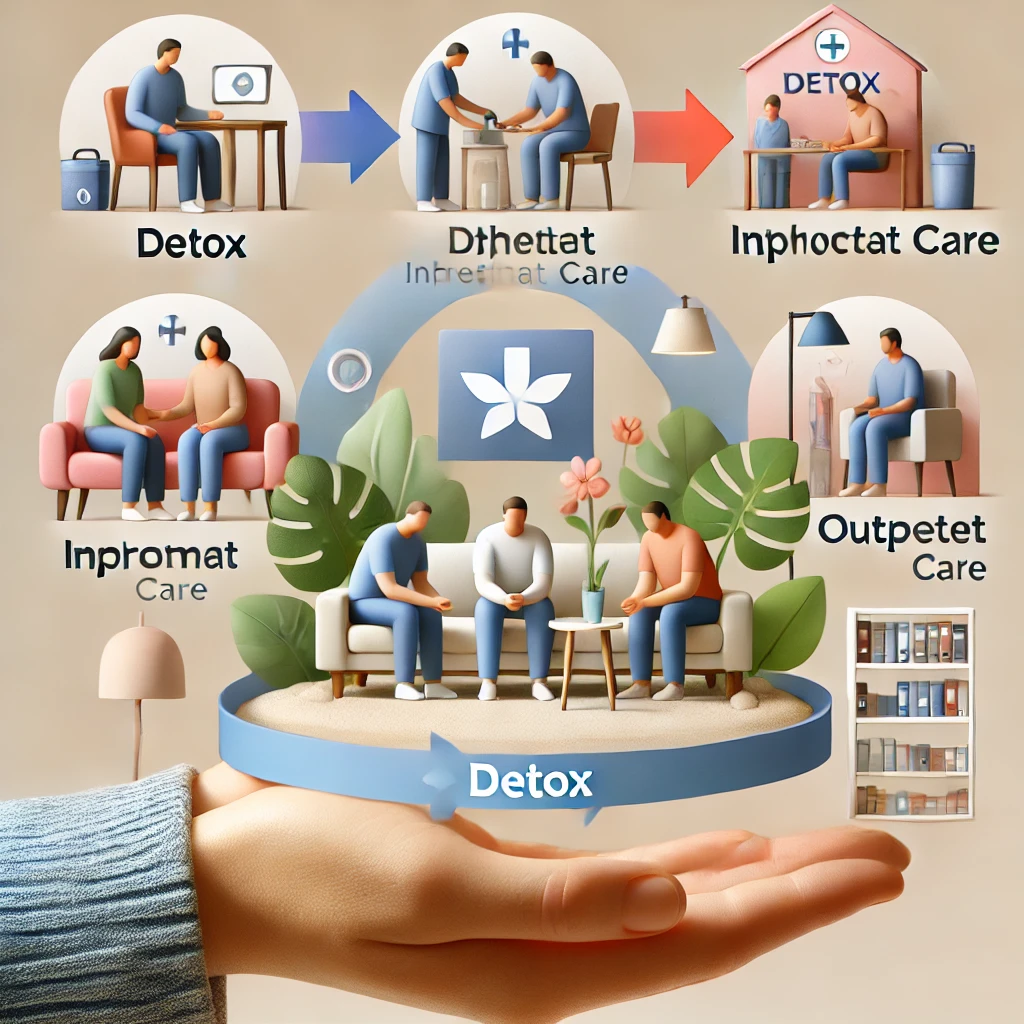
When it comes to addiction recovery, it’s important to understand the different levels of care available. Each person’s journey is unique, and depending on the severity of the addiction and other personal factors, different levels of care might be necessary. Below, we’ll walk you through the main levels of addiction care, from detox to outpatient treatment, so you can better understand what might be the best fit for you or a loved one.
1. Detoxification (Detox)
The first step in many people’s recovery process is detox. This is when the body cleanses itself from the substances it’s been dependent on. Detox usually lasts a few days to a week, and it can be uncomfortable or even dangerous, depending on the substance. That’s why it’s recommended to undergo detox in a medically supervised environment.
In a detox program, medical staff will monitor your health, manage withdrawal symptoms, and ensure you’re safe and as comfortable as possible. This level of care is critical for substances like alcohol, opioids, and benzodiazepines, where withdrawal can be dangerous without medical assistance.
2. Inpatient or Residential Treatment
Once detox is complete, some people move on to inpatient or residential treatment. This is a more intensive level of care where individuals live at the treatment facility. Inpatient care is ideal for those with severe addictions or those who need a break from their usual environment to focus fully on recovery.
At this level of care, patients participate in a structured schedule of therapies, including individual counseling, group therapy, and sometimes family therapy. There’s also medical care available, especially for co-occurring disorders like depression or anxiety. Inpatient care provides a safe and supportive environment where people can learn about their addiction, develop coping skills, and start building a new, sober life.
3. Partial Hospitalization Program (PHP)
Partial hospitalization is a step down from inpatient care but still offers a high level of support. In PHP, individuals don’t stay at the facility overnight but attend treatment for several hours a day, multiple days a week. This option is ideal for people who still need a structured environment but are ready to begin transitioning back to their normal lives.
PHP provides therapy, medical care, and sometimes vocational training or life skills coaching. It’s a great option for those who have completed inpatient treatment but still need more care than traditional outpatient treatment provides.
4. Intensive Outpatient Program (IOP)
Intensive outpatient programs are similar to PHP but less intense. People in IOPs attend treatment sessions several times a week for a few hours at a time. This level of care is ideal for individuals who don’t require 24-hour supervision but still need support while balancing other responsibilities, such as work or school.
IOPs provide a mix of individual therapy, group therapy, and sometimes family counseling. It’s a great option for those transitioning from inpatient or PHP care or for individuals with milder addictions who still need more than just regular outpatient care.
5. Outpatient Treatment
Outpatient treatment is the least intensive level of addiction care. It’s ideal for individuals with mild addictions or those who have already completed higher levels of care and need ongoing support. Outpatient programs typically involve therapy sessions once or twice a week and are designed to help individuals maintain their recovery while living at home and going about their daily lives.
Outpatient care often includes individual therapy, group therapy, and sometimes family counseling. It’s a flexible option that allows individuals to continue working, going to school, or fulfilling other responsibilities while receiving the support they need to stay sober.
6. Aftercare and Continuing Care
Even after completing formal treatment, ongoing care is crucial for long-term recovery. Many programs offer aftercare or continuing care plans that provide support groups, relapse prevention strategies, and check-ins with a counselor or therapist. Support groups like Alcoholics Anonymous (AA) or Narcotics Anonymous (NA) are also common components of aftercare.
This level of care helps individuals stay connected to their recovery community and receive ongoing encouragement as they navigate life after treatment. Having a solid aftercare plan can significantly reduce the risk of relapse.
Finding the Right Care
Understanding the different levels of addiction care is essential in finding the right treatment. The journey toward recovery can be tough, but with the right support and care, it’s possible. No matter where you or a loved one are in the process, help is available.
Each level of care plays a vital role in the recovery process, ensuring that people get the support they need at every stage of their journey. Whether you’re just starting detox or looking for long-term outpatient care, the right program can make all the difference in achieving lasting sobriety.
If you or a loved one are struggling with addiction or mental health issues, please give us a call today at 855-952-3546