Quitting alcohol can feel like a major achievement, and it absolutely is. But for those who have developed a dependence on alcohol, the journey to sobriety often comes with a challenge: alcohol withdrawal. Understanding what happens during this phase can make the process less daunting and help you or a loved one prepare for the road to recovery.
Alcohol withdrawal is the body’s way of adjusting after it has become used to the presence of alcohol. When you stop drinking, your brain and body go through several stages of withdrawal as they attempt to rebalance themselves. Let’s explore these stages and what you can expect during alcohol withdrawal.
Why Does Alcohol Withdrawal Happen?
Alcohol is a central nervous system depressant, meaning it slows down brain activity. Over time, your body adapts to the presence of alcohol by increasing the activity of certain neurotransmitters that stimulate the brain to compensate for alcohol’s depressive effects. When you suddenly stop drinking, the body is left with too much stimulation and not enough calming influence, which results in withdrawal symptoms.
Withdrawal can begin within a few hours after your last drink and can range from mild symptoms like anxiety and headaches to more severe and dangerous conditions, such as seizures or delirium tremens (DTs). The intensity of symptoms depends on the length and severity of your alcohol use.
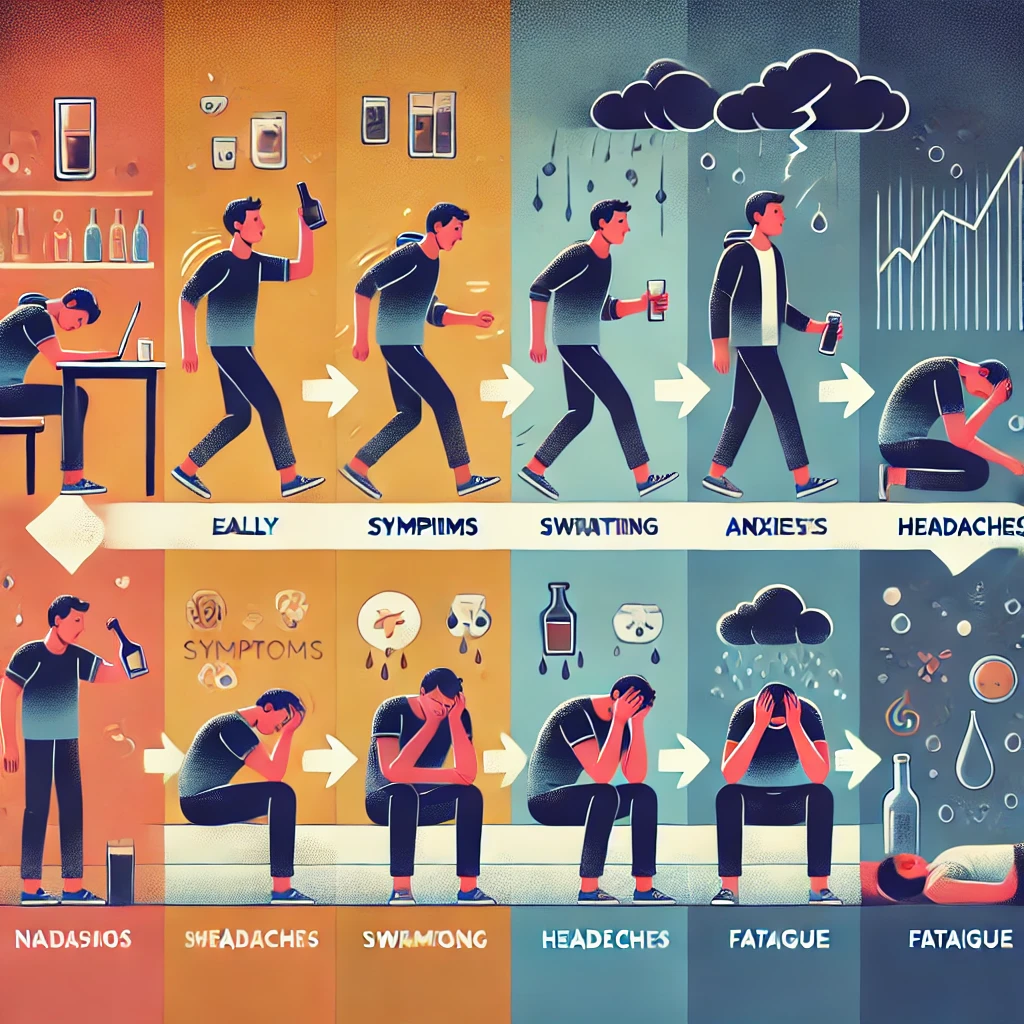
Stage One: Early Symptoms (6–12 Hours After Last Drink)
In the first stage of alcohol withdrawal, symptoms typically begin 6 to 12 hours after your last drink. These initial symptoms are usually mild but can be uncomfortable. Common early withdrawal symptoms include:
- Anxiety: Feelings of nervousness or restlessness may arise.
- Shaking (Tremors): Many people experience tremors, particularly in their hands.
- Sweating: Night sweats or general perspiration are common.
- Headaches: Tension headaches often accompany the early stages.
- Nausea: An upset stomach or nausea may set in, along with a lack of appetite.
This is the beginning of the body trying to regain its balance without alcohol. Though uncomfortable, most people can manage these symptoms with hydration, rest, and a supportive environment.
Stage Two: Peak Withdrawal (24–72 Hours After Last Drink)
After the initial symptoms, withdrawal tends to intensify within 24 to 72 hours. This is considered the peak of alcohol withdrawal, and it’s also the most dangerous phase for those who have been drinking heavily for an extended period. The symptoms can become more severe and may require medical supervision. During this time, you might experience:
- Increased Anxiety: Heightened feelings of worry or panic may emerge.
- Rapid Heart Rate and Elevated Blood Pressure: The body’s overactive nervous system can cause these physical symptoms.
- Hallucinations: Some individuals may see, hear, or feel things that aren’t there, a condition known as alcoholic hallucinosis.
- Seizures: Alcohol withdrawal seizures are a serious risk during this phase, especially in those with a long history of alcohol dependence.
In rare cases, withdrawal can lead to a condition called delirium tremens (DTs), which involves confusion, hallucinations, and even heart complications. DTs are considered a medical emergency, and anyone going through alcohol withdrawal should be closely monitored if they show signs of severe symptoms.
Stage Three: Recovery and Resolution (4–7 Days After Last Drink)
By the fourth to seventh day, withdrawal symptoms typically begin to subside. For most people, this is when the body starts to stabilize, and the more uncomfortable symptoms, like tremors and sweating, begin to diminish. However, some symptoms can linger, including:
- Fatigue: Your body has gone through a lot, so feeling exhausted is normal.
- Mood Swings: Emotional ups and downs may continue as your brain chemistry readjusts.
- Insomnia: Difficulty sleeping might persist for several days or even weeks after withdrawal.
Although the worst of the physical symptoms have passed by this stage, some psychological symptoms—such as anxiety, depression, and cravings—can persist for weeks or months, a condition known as post-acute withdrawal syndrome (PAWS).
Factors That Influence Withdrawal Severity
Not everyone experiences alcohol withdrawal the same way. Several factors can influence how severe or mild the symptoms are, including:
- The amount of alcohol consumed: The more alcohol you drink, the more severe the withdrawal symptoms may be.
- Duration of alcohol use: People who have been drinking heavily for years will likely have a harder time than those with a shorter history.
- Genetics and health conditions: Your body’s ability to process alcohol and overall health can impact how you experience withdrawal.
- Previous detox attempts: If you’ve gone through alcohol withdrawal before, future attempts might be more severe, as your body “remembers” the process.
Seeking Help for Alcohol Withdrawal
Going through alcohol withdrawal is not something you have to face alone. Medical supervision, especially for those with a long history of heavy drinking, is crucial to ensure safety during this time. Detox programs, counseling, and support groups are all valuable resources to help you navigate the challenges of withdrawal and move toward a life of sobriety.
If you or a loved one are experiencing alcohol withdrawal, it’s important to reach out to professionals who can provide the guidance and care needed to get through this difficult phase. Recovery is possible, and getting past withdrawal is the first step toward a healthier, happier life.
If you or a loved one are struggling with addiction or mental health issues, please give us a call today at 888-294-5153.